
A Guide to Table Game House Edges
I have spent years studying casino mathematics, and I still believe the house edge is the key concept any player should understand before placing a bet https://spinlander.eu/. It is not a deceptive ploy or a sign that games are unfair — it is simply the fundamental mathematical advantage that ensures the casino remains a profitable business over the long run. At SpinLander Casino, I see a platform that offers a rich selection of table games, each with its own edge, and I want to help you read those numbers clearly. This article is a measured, objective walk through what house edges really mean, how they differ across games, and how that knowledge can shape your decisions when you sit down at a virtual table or open a live dealer stream. I will not promise you can beat the house, but I will show you how to make more informed choices.
House Edges Across Popular Table Games: A Side-by-Side Look
Blackjack: The Skill-Based Low-Edge Sanctuary
Blackjack is the game I choose when I want the lowest possible house edge without sacrificing the engaging experience of a table game. Under usual rules — dealer holds on soft seventeen, doubling after splitting permitted, three-to-two payout for a natural — the house edge can be as small as 0.5 percent. That indicates for every hundred I bet, I in theory lose only fifty cents over the long haul. At SpinLander Casino, I find several blackjack types, including classic multi-hand tables and live dealer lobbies hosted by real croupiers. The crucial lies in verifying the exact rule set of the table I play at, because a six-to-five blackjack payout immediately boosts the edge to around two percent, which I view as a non-starter.
Roulette: A Tale of Two Wheels
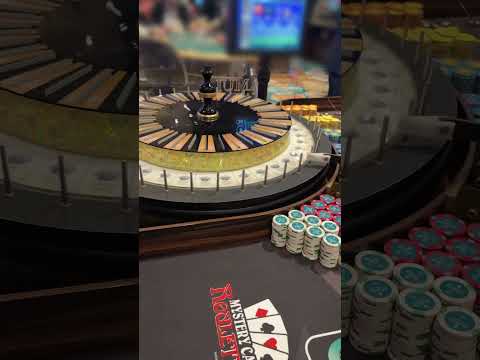
Roulette provides one of the clearest examples of how a single rule change affects the house edge. European roulette, with a single zero, carries a 2.7 percent edge on most bets. American roulette, with a zero and a double zero, increases that to 5.26 percent. When I look through the SpinLander game lobby, I consistently look for European or French roulette tables because they practically halve the casino’s mathematical advantage. French roulette often offers the “la partage” or “en prison” rule on even-money bets, which cuts the edge on those wagers to 1.35 percent. I consider this an excellent compromise for players who enjoy the visual drama of the spinning wheel but prefer to keep the numbers reasonable.
Baccarat game: Simple Bets, Tight Margins
Baccarat is a game I value for its directness and always low house edge. The banker bet offers an edge of about 1.06 percent, while the player bet is at 1.24 percent. The tie bet, however, is a trap I skip, as its edge often surpasses fourteen percent. At SpinLander, the baccarat tables, especially in the live casino section, allow me make these wagers with minimal fuss. I think the pace relaxing, and because no complex strategy is required, I can zero in on bankroll management. The low edge on banker and player bets turns baccarat a strong candidate when I need to meet wagering requirements quickly, assuming the game qualifies fully.
Craps: Depth That Pays Off the Informed
Craps daunts many gamblers with its busy layout, but beneath the surface exists a game where the house edge varies wildly from bet to bet. The pass line and don’t pass line bets, when backed with full odds, present some of the best conditions in the casino, with a combined edge well below one percent. However, proposition bets in the center of the table can carry edges above ten percent. At SpinLander, I can discover digital craps games that let me experiment without the pressure of a crowded table. I regard craps as a game where knowledge truly pays off: sticking to the low-edge wagers and overlooking the flashy high-payout bets maintains my expected losses minimal.
Using House Edge Knowledge in SpinLander Casino
I take all this theoretical knowledge into my practical sessions at SpinLander Casino by starting with a clear game selection process. I access the table games lobby and filter for low-edge options: blackjack variants with stand-on-soft-seventeen rules, European or French roulette, baccarat tables, and craps games where I can stick to pass line bets. SpinLander hosts titles from established software providers, so the rules are transparent and the theoretical returns are published. I set aside a moment to read the game information before I put a single chip. This habit alone has saved me from accidentally selecting a six-to-five blackjack table or an American roulette wheel when a better alternative was just a click away.
Payment methods and payout speeds also interact with my margin-aware approach. SpinLander Casino provides a variety of banking options, including credit and debit cards, e-wallets like Skrill and Neteller, bank transfers, and in some regions, cryptocurrency. E-wallet withdrawals are normally processed within twenty-four hours, while card and bank transfer payouts may take between one and five business days. I choose e-wallets for their speed, because the faster I can access my funds, the sooner I can redeploy them into another session or simply savor the winnings. The house edge operates over time, so minimizing idle periods between sessions does not change the math, but it maintains my bankroll liquid and my decision-making fresh.
The mobile experience at SpinLander merits a mention because it directly affects my ability to keep a strategic, unhurried pace. The casino is fully optimized for mobile browsers, with no mandatory app download. I can log in from my phone or tablet, access the full table game library, and play with the same rule transparency I enjoy on desktop. When I play blackjack on a smaller screen, I still keep a strategy reference open in a separate browser tab, which is easy to toggle. The responsive design ensures that the bet placement buttons are clear, reducing the risk of costly mis-taps. This technical reliability supports the calm, analytical style I promote.
Bonuses at SpinLander, including the welcome package and ongoing reload offers, add another layer to the house edge conversation. I always read the terms and conditions to understand how table games count toward wagering requirements. It is typical for blackjack and roulette to contribute only ten or twenty percent, while slots account for one hundred percent. This indicates I might have to wager a much larger total amount on table games to fulfill a bonus. I incorporate this into my calculations: if the effective playthrough on blackjack is five times higher due to weighting, the low house edge may still be a viable path, but I do the numbers first. I never assume a bonus is favorable without completing this simple arithmetic.
Security and licensing are the foundation on which all this mathematical trust rests. SpinLander Casino works under a recognized gambling license, and I can confirm this by checking to the footer of the website, where the license badge and registration number are displayed. The games utilize independently tested random number generators, and the live dealer streams are checked for fairness. I recognize that the house edge figures I depend on are not theoretical fantasies but are verified by audited systems. This confidence lets me focus on strategy and game selection rather than concerned about whether the outcomes are genuine. In my opinion, a licensed, transparent casino is the only environment where edge-conscious play is worthwhile.
At the end of the day, my aim at SpinLander is not to discover a magical way to eliminate the house edge — that is unattainable without counting cards or abusing promotions in ways that are commonly forbidden. Rather, I aim to lessen the mathematical toll while enhancing the entertainment value. By choosing low-edge games, engaging with optimal strategy, and honoring the terms associated to bonuses, I give myself the most extended possible runway. The house will constantly have its percentage, but I determine how much I spend for the experience. That, to me, is the real power of understanding table game house edges. I encourage you to take this knowledge into the SpinLander lobby, study the rules, evaluate the edges, and place every bet a deliberate, informed decision.
Roulette Spinners and Their Hidden Differences
European-format, American-format, and French: Beyond Surface Names
When I look through SpinLander’s roulette library, I spot titles like European Roulette, American Roulette, and French Roulette, and I recognize these are not just branding labels. European roulette has thirty-seven compartments with a single zero, giving a 2.7 percentage house edge on most plays. American roulette adds a 00 pocket, bringing the total to thirty-eight and the edge to 5.26 percentage. French roulette employs the same wheel with one zero as European but includes en.wikipedia.org advantageous rules on 50-50 bets. If the ball falls on zero, the “la partage” rule gives back half the bet, lowering the advantage on those wagers to 1.35 percentage. The “en prison” rule alternatively keeps the bet for a subsequent spin, offering a comparable decrease. I actively search for French roulette tables at SpinLander for equal-money betting tactics.
Announced Bets and Track Layouts
Some roulette games at SpinLander offer a track betting section that enables me to place announced bets, also known as call bets. These are collections of bets spanning certain parts of the wheel, such as voisins du zéro or tiers du cylindre. While these bets do not alter the underlying house edge, they let me to execute complex betting patterns rapidly. I use them when I desire to target extensive wheel areas without manually placing numerous chips. The margin stays the same 2.7 percentage on a one-zero wheel, but the ease reduces the risk of misclicks. I view this a quality-of-life feature that supports my disciplined play rather than modifying the mathematics.
What Specifically Is a House Edge and Why It Is Important
When I talk about the house edge, I am describing the percentage of each wager that the casino anticipates keeping over an enormous number of rounds. If a game has a house edge of two percent, the theoretical return to the player is ninety-eight percent, implying for every hundred units wagered, the player can expect to lose two units in the long term. This is not a per-session guarantee; short-term variance can produce winning streaks that significantly surpass that small mathematical drain. The edge matters because it informs me which games give my bankroll the longest potential lifespan, all else being equal. unbiased review At SpinLander Casino, where I can choose from dozens of table games, understanding this number helps me decide where I spend my time and money.
The house edge is not a fee deducted from each bet. Instead, it is woven into the payout structure. For example, a winning bet on a single number in European roulette pays thirty-five to one, but the true odds are thirty-six to one because there are thirty-seven pockets. That one-unit shortfall on every winning spin creates the edge. I find this distinction essential because it means the casino does not need to manipulate outcomes; the mathematics operates quietly in the background. At SpinLander, the games operate on certified random number generators or live dealer equipment, so the published edges hold true over time, as long as I follow the standard rules of each variant.
Why does this matter for your experience at SpinLander Casino? Because the house edge directly affects bonus terms. When I claim a welcome offer or a reload bonus, I must usually wager the bonus amount a certain number of times before I can withdraw. During that playthrough, the house edge steadily grinds away at my balance. If I play high-edge games exclusively, I am more likely to see my bonus funds evaporate before meeting the requirements. By choosing lower-edge table games, I can prolong the playthrough further, though I should always check the game weighting percentages in the promotion terms. SpinLander, like most casinos, often assigns a reduced contribution for blackjack or roulette, so I review those details carefully.
The importance of planning: Decreasing the casino advantage by ability
I cannot possibly overstate how much choices by players impact the effective house edge in strategy-based table game offerings. In blackjack, flawless fundamental strategy brings down the advantage to its minimum possible lowest point. If I commit even a few common mistakes — staying on sixteen against a dealer seven, or neglecting to split eights — I am voluntarily offering the casino a bigger advantage than the game’s structure requires. At SpinLander Casino, I possess the luxury of playing in a exclusive virtual space where I can have a decision chart open on another screen without any hurry. I use this to my advantage, ensuring every hand I play follows the best mathematical decision. This transforms blackjack from a game of chance into a structured practice in probability management.
Video poker, which I also locate in SpinLander’s table games and card games area, is another area where strategy dramatically changes the payback. A full payout Jacks or Better unit with perfect decision-making can yield over 99 percent, equating to a house edge less than 0.5 percentage points. However, pay schedules change, and the difference between a 9/6 and an 8/5 Jacks or Better game changes the payout by multiple percent. I always check the pay schedule before dedicating my money. The serene, analytical approach I bring to these games is not about chasing big wins but about systematically selecting the version that offers me the best statistical challenge.
Even in games with no choices, like baccarat, tactics exists at the wagering tier. I pick the banker wager consistently because it carries the lowest edge, and I avoid the tie wager entirely. This is a calculated decision, not a belief. At SpinLander, I can establish my wagering habits and let the game progress without reconsidering. The house edge is already minimal; my role is simply not to boost it by going after long-shot bets. I see this as a type of defensive tactic — betting less to reduce losses. It is a perspective that has benefited me effectively across numerous sessions.
The method House Edge Gets Calculated: The Numbers Explaining the Percentage
I want to demystify the calculation since once you understand the logic, you will not look at a table game in the same manner again. The house edge is derived by comparing the true odds of an event to the payout odds the casino offers. True odds show the actual probability of a winning outcome, while payout odds are what the casino offers. The difference, expressed as a percentage of the wager, is the edge. For a simple coin-flip game where I bet on heads and the casino gives ninety-five cents on a one-dollar bet rather than even money, the edge is five percent. Every casino game, no matter how complicated, can be broken down into this fundamental relationship between probability and payout.
In games with multiple outcomes, like roulette, I work out the expected value by multiplying each possible result’s probability by its payout and summing them. For a straight-up bet on a single number in European roulette, the probability of winning equals one in thirty-seven. The payout is thirty-five to one. The expected return comes to (1/37)*35 plus (36/37)*0, which equals about 0.946, or a 5.4 percent house edge. In American roulette with an extra double-zero pocket, the probability goes down to one in thirty-eight, and the edge climbs to 5.26 percent. I do these mental checks whenever I come across a new game variant at SpinLander, because small rule tweaks can alter the edge noticeably.
For more intricate games like blackjack, the calculation is not a single equation but a combinatorial analysis that takes into account every possible player decision, dealer upcard, and card removal effect. Computer simulations execute billions of hands to determine the optimal strategy and the resulting house edge under a given rule set. When I play at a SpinLander blackjack table, the published theoretical return is based on I am playing perfect basic strategy. If I depart, my personal edge worsens. This is why I always keep a strategy chart handy when I play online, where the environment feels pressure-free and I can go at my own pace with each decision.
Rule Differences That Shift the House Edge in Blackjack
Dealer Holds on Soft 17 Vs. Hits
Among the most important rule differences I find at SpinLander’s blackjack tables is whether the dealer stands or hits on a soft seventeen. A soft seventeen is any hand containing an ace valued as eleven that totals seventeen, such as ace-six. When the dealer must hit soft seventeen, the house edge increases by approximately 0.2 percent compared to a stand-on-soft-seventeen game. This might sound trivial, but over thousands of hands, it adds up. I always check the table rules before I sit down, and I gravitate toward games where the dealer stands, because every fraction of a percent I save keeps my bankroll healthier for longer.

Doubling and Splitting Restrictions
A further set of rules that I scrutinize involves doubling down and splitting pairs. Some tables allow doubling on any two cards, while others restrict it to hard totals of nine, ten, or eleven. The latter restriction increases the house edge by about 0.1 percent. Similarly, the ability to double after splitting, and whether I can resplit aces, matters. At SpinLander, the blackjack variants often display their rule sets in the game information panel. I prefer tables that permit doubling after splitting and allow resplitting of aces, as these options give me more opportunities to put extra money on the table when the odds favor me. Losing these options hands a small but real advantage back to the house.
Deck Count and Its Subtle Influence
The number of decks in play is a variable I never ignore. A single-deck game with favorable rules can yield a house edge as low as 0.15 percent, but such games are rare online. More commonly, I see six-deck or eight-deck shoes at SpinLander. As the number of decks increases, the player’s chance of drawing a natural blackjack decreases slightly, and the effectiveness of doubling down on certain hands diminishes. The difference between a six-deck and an eight-deck game is small — roughly 0.02 percent — but combined with other rule tweaks, the cumulative effect can be meaningful. I treat deck count as one piece of the puzzle rather than a deciding factor on its own.